
Coffee pricing is a hot topic right now.
If you ask, customers will almost certainly tell you that a cup of coffee costs too much.
On the other hand, as a business owner you know that the cost of wages, rent & ingredients continue to rise.
Something’s got to give, this begs the question…
How much should you charge for a cup of coffee?
The ideal price to charge for a cup of coffee depends on balancing these 3 factors:
- The Cost of Ingredients
How much does each cup really cost you? - Your Competitors’ Prices
What’s the going rate in your area? - Your Price Position
Where do you want to be positioned in the market?
Balancing all three factors is key to maintain sales growth and overall profit.
I’ll cover all 3 of these in this article, but let’s start with the cost of ingredients
How much does a cup of coffee cost?
When calculating the cost of a cup of coffee, you need to consider both food ingredients like coffee beans and milk, as well as packaging such as paper cups and lids.
In Australia, the average component costs for a 12oz takeaway Flat White typically comes in at around $1.55 per cup (or around $2.10 per cup if we include GST).
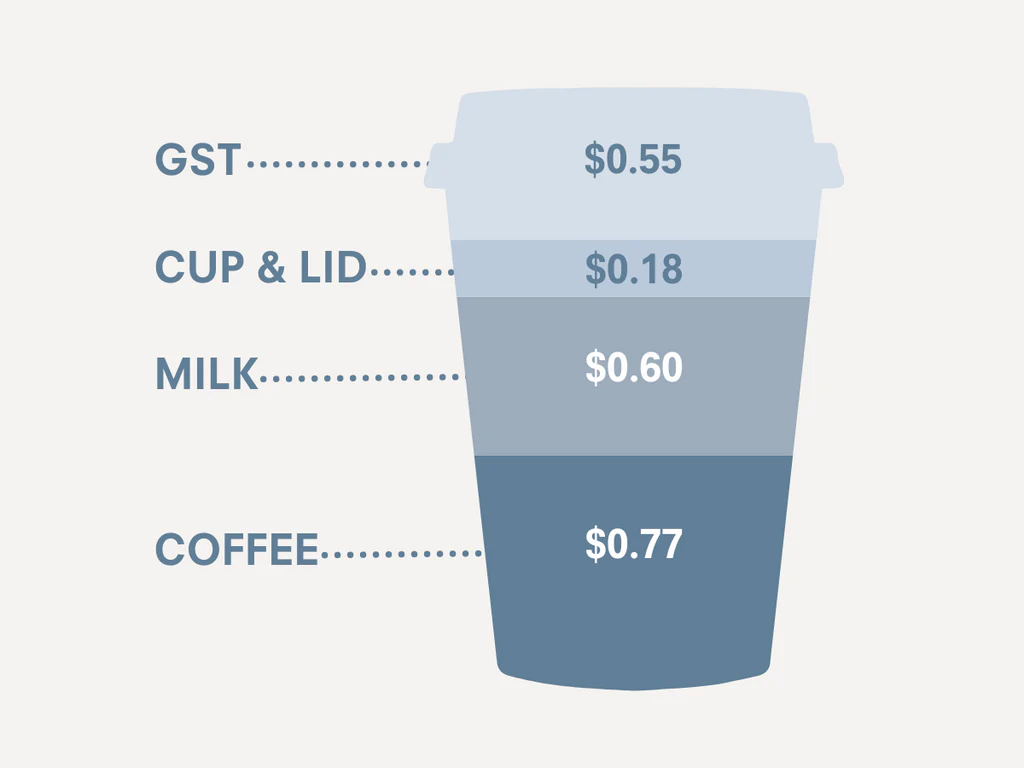
In accounting terms, these expenses are known as the “cost of goods sold” (COGS). They’re the direct costs associated with producing your product, and they don’t include things like wages, rent, or your Spotify subscription – only the costs that directly relate to the product. The other expenses—like rent, labour, and utilities—are shared across all the products you sell. It’s more effective to manage these as part of your overall monthly profit and loss statement.Unfortunately, for many cafe businesses, once we deduct both the cost of goods and all the other expenses, there’s often very little left for the owners.If you want to dig a little deeper into how cafe profit works, and what you can do about, I cover overall cost of sales & gross profit in more detail in this article: 5 ways to improve café profit.
Coffee Pricing Strategy: Putting It All Together
The ultimate goal for your pricing strategy is to find the sweet spot where you’re charging enough to sustain a profitable business without stunting growth.
Here’s my rough process for reviewing coffee pricing and profit:
- Assess Overall Gross Profit
Start by examining the gross profit trend in your business. Is it flat or decreasing over time? Identify where it needs to be. You can find this information by comparing Profit & Loss statements from previous months or years. - Compare Prices to Competitors
Pay close attention to high-volume items like milk-based coffees and hot chocolate, as well as other similar menu items. Identify any gaps where you need to increase prices to align with your market position. Also, keep an eye on surcharges and ongoing discounts—they might seem insignificant but can make a big difference overall. - Consider Price Points
Incremental changes are easier for customers to digest. For example, it’s less noticeable to go from $5.80 to $5.90 than from $5.90 to $6.00. At some point, you’ll need to make the leap, but be mindful of how customers perceive these changes. - Draft New Pricing
Write up a new menu and implement the changes.
There are more sophisticated ways to project how a price change will affect your bottom line, which I won’t delve into here. Your accountant can help if you want to dive deeper into the details.
The bottom line is this: Prices and costs always increase over time. To maintain margins, you need a regular process for reviewing pricing and profit to ensure a sustainable business in the long run.

